
Office Phone Booths vs Traditional Conference Rooms
Modern workplaces are evolving rapidly. With open offices, hybrid teams, and limited floor space becoming the norm, businesses are rethinking how they create private meeting areas. This is where office booths (phone booths) are emerging as a smart alternative to traditional conference rooms.
In this blog, we compare office phone booths vs traditional conference rooms to help you choose the right solution for your workspace.
Space Efficiency
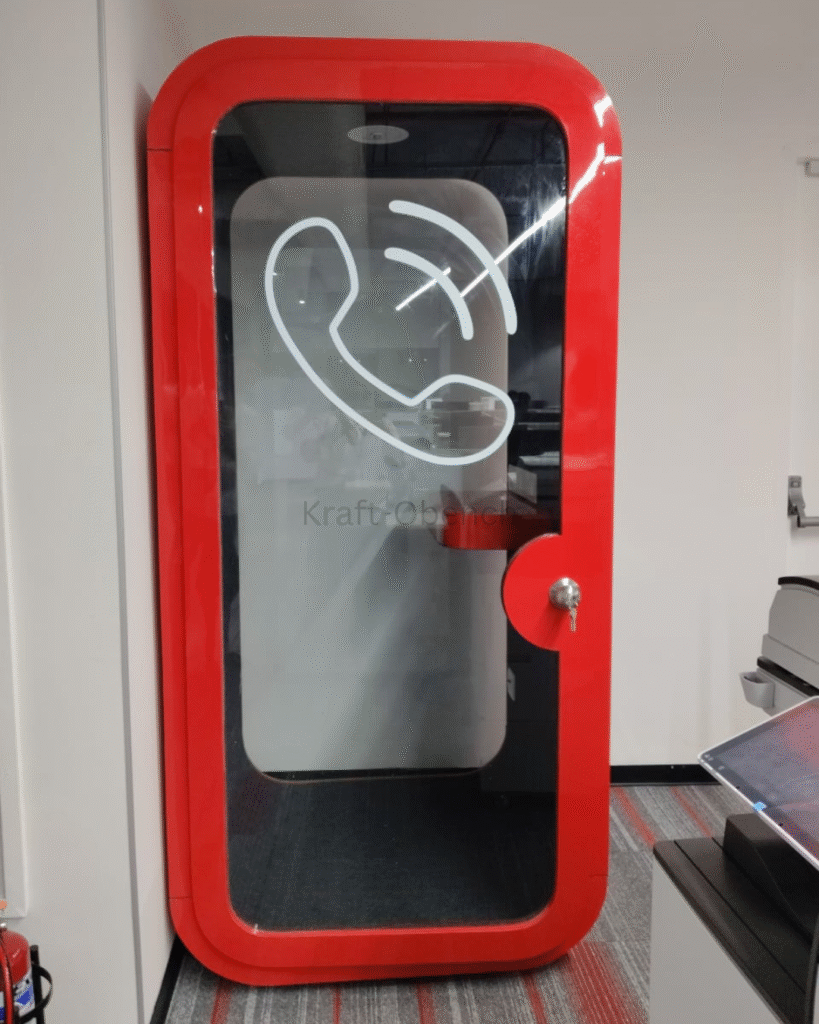
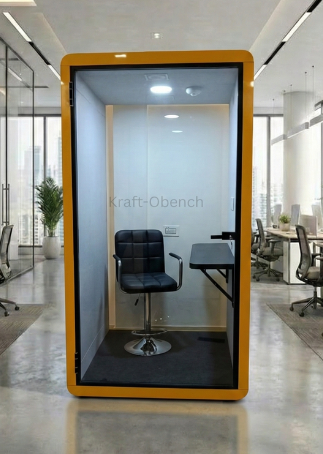
One of the biggest advantages of office phone booths is their compact design. Unlike traditional conference rooms that require permanent walls, doors, and large layouts, phone booths and meeting pods occupy minimal space.
For startups, coworking spaces, and growing offices, this means:
1. Better utilization of floor area
2. No need for major construction
3. Easy placement even in small offices
Traditional conference rooms often remain unused for long hours, while phone booths can be placed strategically and used throughout the day.
Acoustic Advantages
Noise is a common problem in open-plan offices. These are specifically engineered with acoustic panels and soundproofing materials to block external noise and prevent sound leakage.
This ensures:
1. Complete privacy for calls and meetings
2. Clear audio for video conferences
3. Zero disturbance to nearby teams
In contrast, traditional conference rooms may still allow sound to travel through walls or doors, especially in busy offices.
Cost-Effectiveness
Building a traditional conference room involves:
1. Civil work and construction
2. Electrical and acoustic setup
3. Time, approvals, and high costs
On the other hand, phone booths for office are plug-and-play solutions. They are far more affordable, require no permanent changes, and can be relocated if your office layout changes.
This makes them a cost-effective investment, especially for companies scaling fast or working in rented spaces.
Use Cases
Office booths (Phone Booths) are designed for flexibility and daily use. Common use cases include:
2. Quick team syncs
3. One-on-one discussions
4. HR or feedback meetings
5. Video calls and interviews
6. Focused individual work
Traditional conference rooms are often booked for long meetings, while phone booths support spontaneous and frequent communication.
Conclusion
When comparing flexibility, privacy, and cost, office phone booths clearly stand out as a modern solution. They complement open offices, support hybrid work culture, and provide instant private spaces without heavy investment.
For businesses looking to improve productivity and communication, office phone booths are no longer optional they’re essential.
FAQs
How many people can fit in a meeting pod?
Usually 2-4 people, depending on the booth size.
Are booths suitable for long meetings?
Yes, most are designed with comfort for extended use.